

A 'Quick Exit' button is at the top of each page, as well as from the side menu, if you need to quickly leave these pages. This takes you to VIU News.
Vancouver Island University (VIU) is committed to creating a respectful, safe and supportive learning, working and living environment where members of the University community are free from sexual violence and sexual misconduct.
You are not alone. There are several steps you can take and resources you can access for support and assistance if you have experienced sexualized violence.
Members of the VIU community are invited to join the conversation about sexual violence. Conversations can help raise awareness about sexual violence, consent, support services and let survivors know they are not alone.
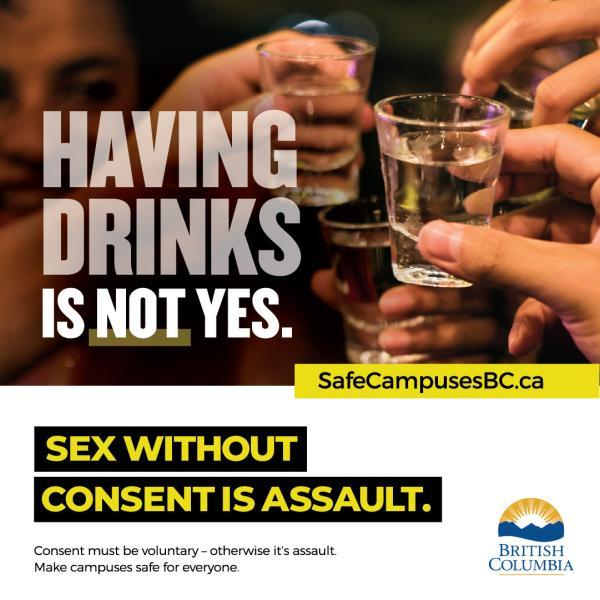
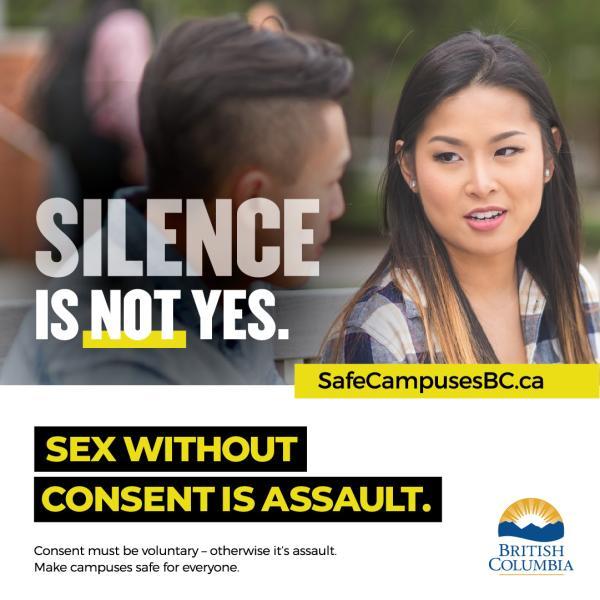
Everyone has boundaries and they need to be treated with respect. Make consent part of your daily life because consent isn’t something we do just once, we need to do it all the time.
VIU’s Sexual Misconduct Policy and associated Procedure demonstrate this commitment and ensure everyone, regardless of gender identity, gender expression or sexual orientation feels safe and supported. Together, we can create a culture of respect and understanding.
Resources If I Have
Sexual Misconduct Support Resources
What to do and how to get help
What is Sexual Misconduct?
Sexual misconduct occurs when a person experiences an unwanted sexual behaviour or advance. This may include physical, verbal, psychological, or cyber incidents. Some examples of sexual misconduct may include sexual touching without consent, sexual harassment, stalking, violence, using derogatory language, sending or receiving digital sexual images without consent, and much more.
Immediate Help
Call 911 if you are in danger or need immediate medical help.
Resources
- VIU Counsellors
- Phone: 250.740.6416
- VIU Counselling
- VI Crisis Line
- Phone: 1.888.494.3888
- VI Crisis Line
- Haven Society
- Phone: 1.888.756.0616
- Haven Society
If you have experienced sexual misconduct, help is available. There are different ways to get support. You have choices. Here are some steps you can take:
Tell someone (Disclosure)
- You can safely tell anyone at VIU about the incident and ask for counselling or other personal support
- You do not have to prove that the incident occurred to access this support
- What you share is kept private and confidential
- You can share as much or as little as you want
Make a VIU report
- You can make a report to VIU if you want to ask the university to take action about what happened to you.
- :VIU's actions could include
- an investigation into what happened
- consequences for the person who committed the misconduct
- accommodations to help you feel safe
- VIU will keep information private to the extent possible.
- To make a report, contact VIU's Diversity, Equity, and Human Rights Office
Call the Police
- You can tell the police what happened if you think you would like to make a criminal report.
Whatever you decide to do, you are not alone. VIU is here to support you.
What you need to know
What is Sexual Misconduct?
Sexual misconduct occurs when a person experiences an unwanted sexual behaviour or advance. This may include physical, verbal, psychological, or cyber incidents. Some examples of sexual misconduct may include sexual touching without consent, sexual harassment, stalking, violence, using derogatory language, sending or receiving digital sexual images without consent, and much more.
Support Resources
- VIU Counsellors
- Phone: 250.740.6416
- VIU Counselling
- VI Crisis Line
- Phone: 1.888.494.3888
- VI Crisis Line
Being accused of sexual misconduct is stressful, and you need to understand your rights and responsibilities. You should also be prepared for the process VIU will carry out in response to a report of sexual misconduct.
Your Rights
As a member of the VIU community, you have the right to:
- Be treated with dignity and respect
- Be informed about campus and community services/resources
- Decide whether to access services
- Receive clear information throughout the process
- Be accompanied by a support person throughout the process
Your Responsibilities
You also have responsibilities. These are:
- To have no communication or contact with the person who reported the incident - including in person, email, social media, or through another person
- To participate in any investigation or other measures required by VIU
What happens if someone makes a report against you?
If you are named in a report of sexual misconduct, you will be notified and these steps will be taken:
- VIU will first address any immediate safety concerns
- VIU will review the report and determine if an investigation or if a different process will take place
- If VIU proceeds with an investigation, the investigation manager will follow the steps outlined in VIU's procedures
- You have the right to be accompanied by a support person throughout the process
- You also have the right to a lawyer
- If the investigation determines misconduct too place, disciplinary action will be taken.
What to do - VIU Faculty and Staff Guide
What is Sexual Misconduct?
Sexual misconduct occurs when a person experiences unwanted sexual behaviour or advance. This may include physical, verbal, psychological, or cyber incidents.
Immediate Help
Call 911 if the student is in danger or needs immediate medical help.
Resources
- VIU Counsellors
- Phone: 250.740.6416
- VIU Counselling
- VI Crisis Line
- Phone: 1.888.494.3888
- VI Crisis Line
- Haven Society
- Phone: 1.888.756.0616
- Haven Society
Support for You
Hearing a disclosure of sexual misconduct can be difficult. Is may be helpful to get support for yourself. You can access free emotional support through VIU's EFAP:
Receiving a disclosure of sexual misconduct from a student can be stressful. It is important to recognize and acknowledge that the student has agency over their next steps in the process. his is how you can support them.
How to Respond
-
Listen
- Find a private place to talk, give them your full attention, and allow the student to share as much or as little as they want.
-
Believe
- Listen to them without judgement and believe what they share with you
- Validate their emotions and normalize their reactions
- Let them know what happened was not their fault
-
Empower
- Support the student in making their own choices about what to do next. Discuss the below options with them
- Ensure they are safe and that their medical needs are met
Access Support
- If the student agrees, you can help them get connected to one of the resources listed to the left
Make a VIU Report
- The student can make a report to VIU if they want to ask the university to take action about what happened to them.
- VIU's actions could include:
- an investigation into what happened
- consequences for the person who committed the misconduct
- accommodations to help the student feel safe
- To make a report, contact VIU's Diversity, Equity, and Human Rights Office
- VIU's actions could include:
Support Resources - Printable PDFs


Safer Campuses for Everyone
Vancouver Island University (VIU) is committed to creating a respectful, safe and supportive learning, working and living environment where members of the University community are free from sexual violence and sexual misconduct. We can all work together to create this community by learning more and taking steps to respect and support each other. You can do your part by completing all modules in this course and by bringing this learning into your everyday lives.
If you wish to offer feedback on the course, please send any comments to Thrive@viu.ca.
Thank you for helping to make VIU a healthy and safe place for all!
Click the button below to go to VIULearn, and then enroll in the course!

Email Thrive@viu.ca to register by submitting the following:
Hi,
Please register me for Safer Campuses for Everyone - Employees.
Name:
Employee ID:
Understanding Consent
Consent is not just for sex, it brings more care, respect and understanding to all of our relationships.
Practice makes perfect!
- Don’t tell other people’s stories
- Obtain consent before engaging in all forms of touch
- Get everyone’s input when planning group activities
- Ask before photographing or posting photos of other people online.
Feeling free to say yes or no is important to keep you from getting hurt or hurting others, and is part of a satisfying life, grounded in free choice.
Everyone has boundaries and they need to be treated with respect. Make consent part of your daily life because consent isn’t something we do just once, we need to do it all the time.